The honest answer: you cannot know which hairstyle suits you by reading about it — you have to see it on your own face. Face shape gives you a shortlist (a round face wants length and height, a square jaw wants softening, a long face wants width), but the only way to settle it is to look at the cut on your own photo before a stylist picks up the scissors. This guide does both: measure your face shape in about a minute, get the cuts that balance it for women and men, then try them on your own photo free.
The five minutes before a haircut you cannot undo — this is where a preview earns its keep.
The 60-second version
Pull your hair back, face a window, take a straight-on photo.
Compare four widths — forehead, cheekbones, jaw, and face length. Whichever is widest names your shape.
Pick two or three cuts from your shape’s row below.
Put them on your own photo before you commit.
How to find your face shape (measure it, do not guess)
Almost everyone guesses wrong about their own face, usually calling it round when it is actually square or heart-shaped. Four measurements settle it. Tie your hair back, look straight into a mirror or a front-facing photo, and compare:
Forehead width — across the widest part, roughly halfway between your brows and hairline.
Cheekbone width — from the outer corner of one eye, across, to the other.
Jaw width — from below one ear to the point of your chin, doubled.
Face length — hairline straight down to the bottom of your chin.
You are not looking for exact centimetres — you are looking for which one is biggest, and whether your face is longer than it is wide. Those two answers place you in the table below.
Face shape
The giveaway
Quick rule
Oval
Slightly longer than wide, jaw a touch narrower than the forehead, chin softly rounded
Length ≈ 1.5 × cheekbone width
Round
Width and length about equal, widest at the cheeks, no hard angles anywhere
Length ≈ width, soft jaw
Square
Width and length about equal, but forehead, cheeks and jaw are all near the same width with visible corners
Length ≈ width, angular jaw
Heart
Forehead is clearly the widest point, narrowing to a small or pointed chin
Forehead > cheeks > jaw
Oblong (rectangle)
Noticeably longer than wide, with forehead, cheeks and jaw all similar in width
Length ≫ width
Diamond
Cheekbones are the widest point, with both a narrow forehead and a narrow chin
Cheeks > forehead ≈ jaw
If two rows fit, you are between shapes — which is normal. Use whichever row matches your widest measurement.
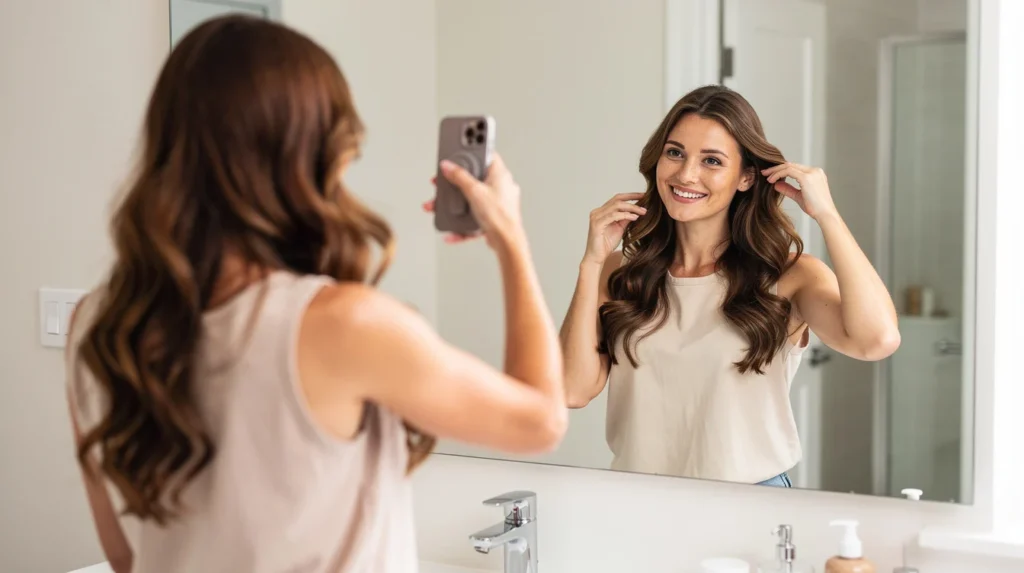
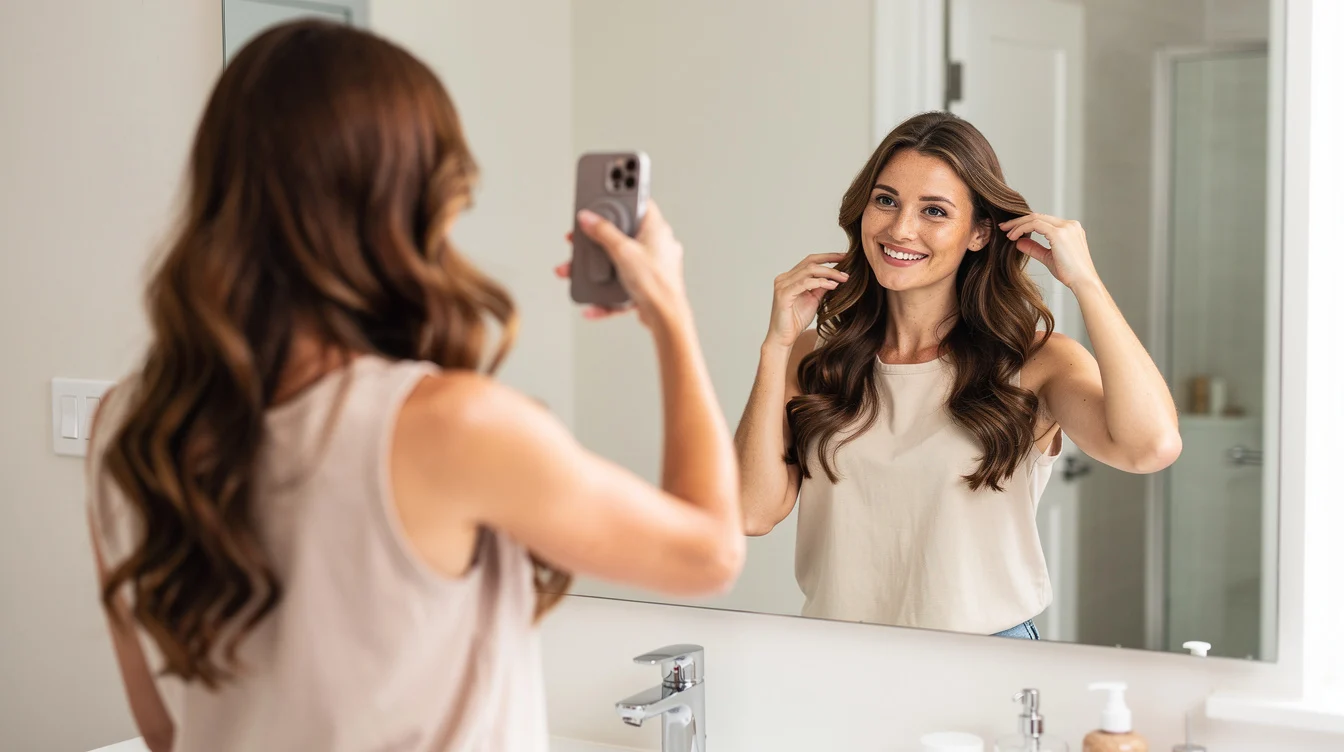
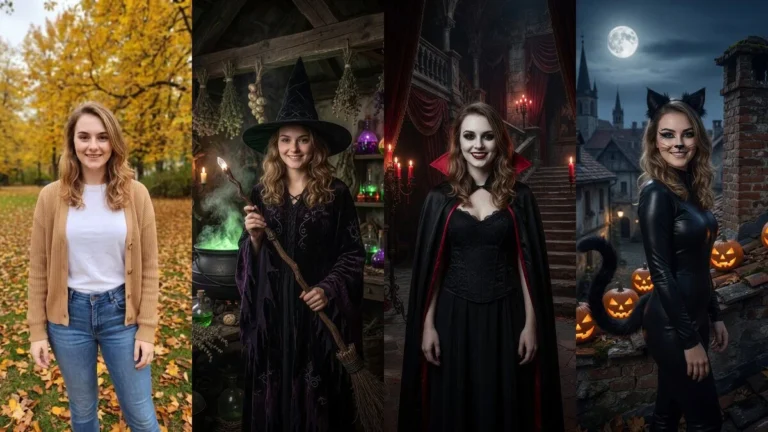
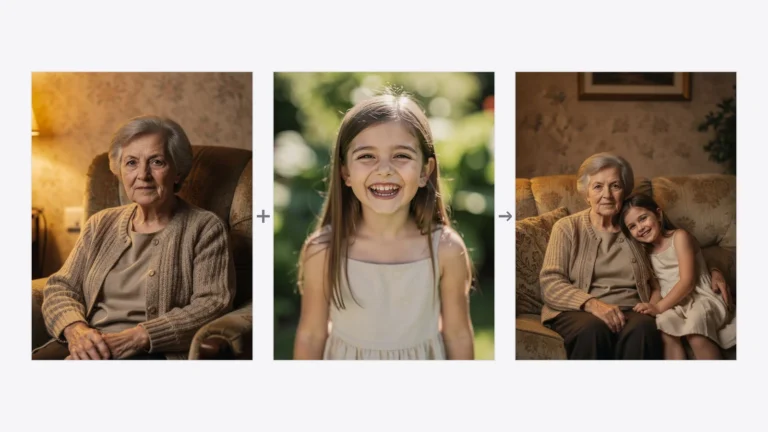
Your photo can look like this too
Try it on your own picture — no card, no subscription, and you get free credits to start.
Every recommendation below follows one principle: hair is used to balance, not to match. Whatever your face has a lot of, the haircut plays down; whatever it lacks, the haircut adds. That is the entire theory.
Oval face — the easy one
Already balanced, so almost nothing is off-limits. Women: blunt bob, long layers, pixie, curtain bangs — all work. Men: taper, textured crop, quiff, longer swept back. The one thing to watch: a heavy straight-across fringe hides the forehead and can shorten an oval into a round.
Round face — add height, remove width
Women: long layers that fall below the chin, a deep side part, a pixie with height on top, side-swept bangs. Men: volume on top with short sides — a high fade with a textured quiff or pompadour. Avoid: a blunt chin-length bob (it puts the widest part of the cut on the widest part of the face), a full rounded fringe, and for men a buzz cut all over.
Square face — soften the corners
Women: soft layers starting below the jaw, waves, a side-swept fringe, a long bob that ends past the chin. Men: a square jaw carries almost everything — buzz cuts, crew cuts and short textured crops look strong on it, and a little length on top softens if you want that. Avoid: a blunt cut that ends exactly at the jawline, which draws a second hard line across an already angular face.
Heart face — add width at the jaw
Women: chin-length or collarbone cuts with the volume sitting low, curtain bangs, a side part. Men: fuller sides, a fringe worn forward, medium length — and a beard is the fastest way to add jaw width. Avoid: tall volume on top and tight slicked-back styles, both of which exaggerate a wide forehead.
Oblong face — cut the length, add width
Women: a blunt bob or lob, waves through the mid-lengths, and a fringe — curtain or blunt — to visually shorten the forehead. Men: keep the sides fuller and the top flatter, with a forward-textured crop or a fringe. Avoid: very long straight hair and high volume on top, which both stretch the face further.
Diamond face — soften the cheekbones
Women: chin-length styles with volume at the jaw, a side-swept fringe, texture around the chin to widen it. Men: a fringe worn forward to widen the forehead, some length near the jaw, and a beard to balance a narrow chin. Avoid: anything slicked tight to the head, which leaves the cheekbones as the only wide point.
Which hairstyle suits me — women
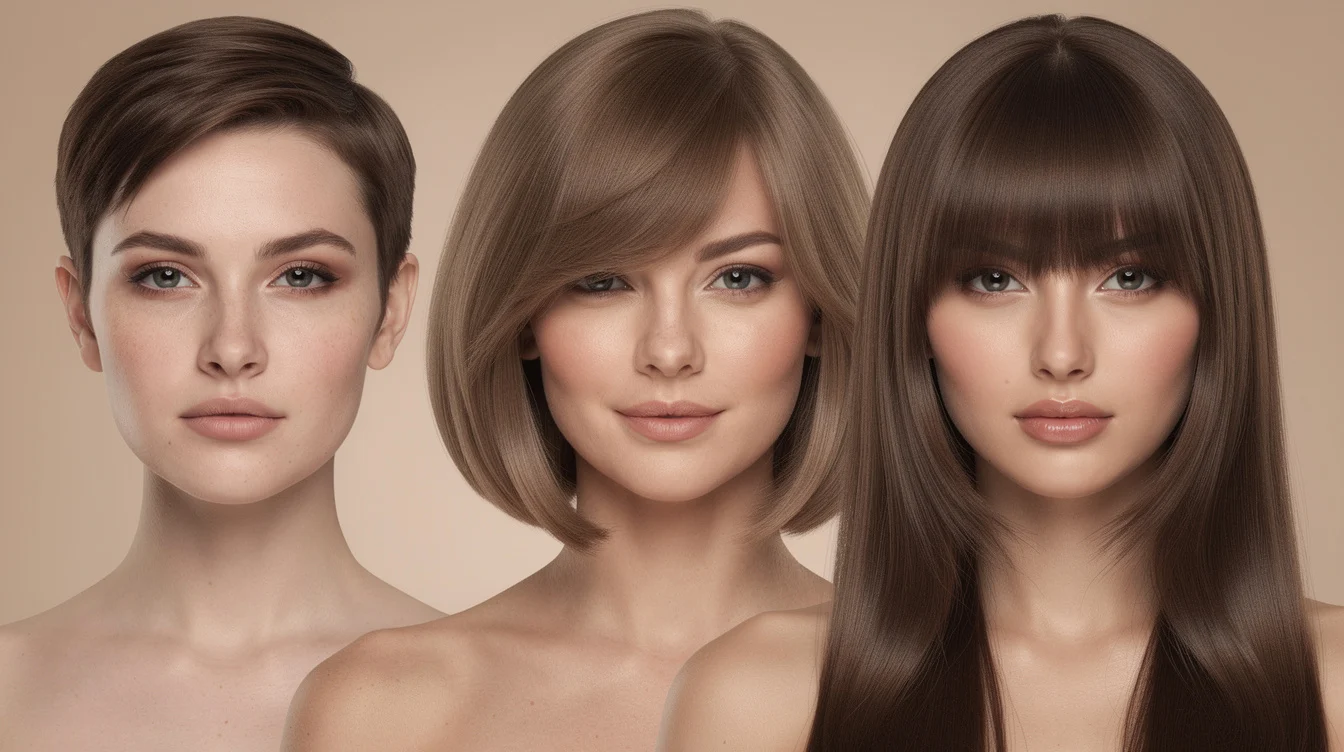
The same three cuts read completely differently depending on face shape and hair texture — which is why previewing beats guessing.
Face shape gets you the shortlist. Three other things decide whether you will actually like living with the cut:
Texture and density beat shape. Fine hair will not hold heavy disconnected layers, and thick hair cut into a short blunt bob will grow outward rather than down. If your hair is curly, remember it will sit noticeably shorter dry than it looked wet in the chair.
Be honest about styling time. A blunt bob looks effortless in photographs and needs regular blow-drying to stay that way. Long layers forgive far more.
Think about the grow-out. A pixie has an awkward stage measured in months. A lob does not. If you are unsure, cut in stages.
If you want a low-risk change, keep the length and move the frame instead: a fringe, a different part, or face-framing layers change how your face reads far more than most people expect, and they grow out in weeks rather than a year.
Which hairstyle suits me — men
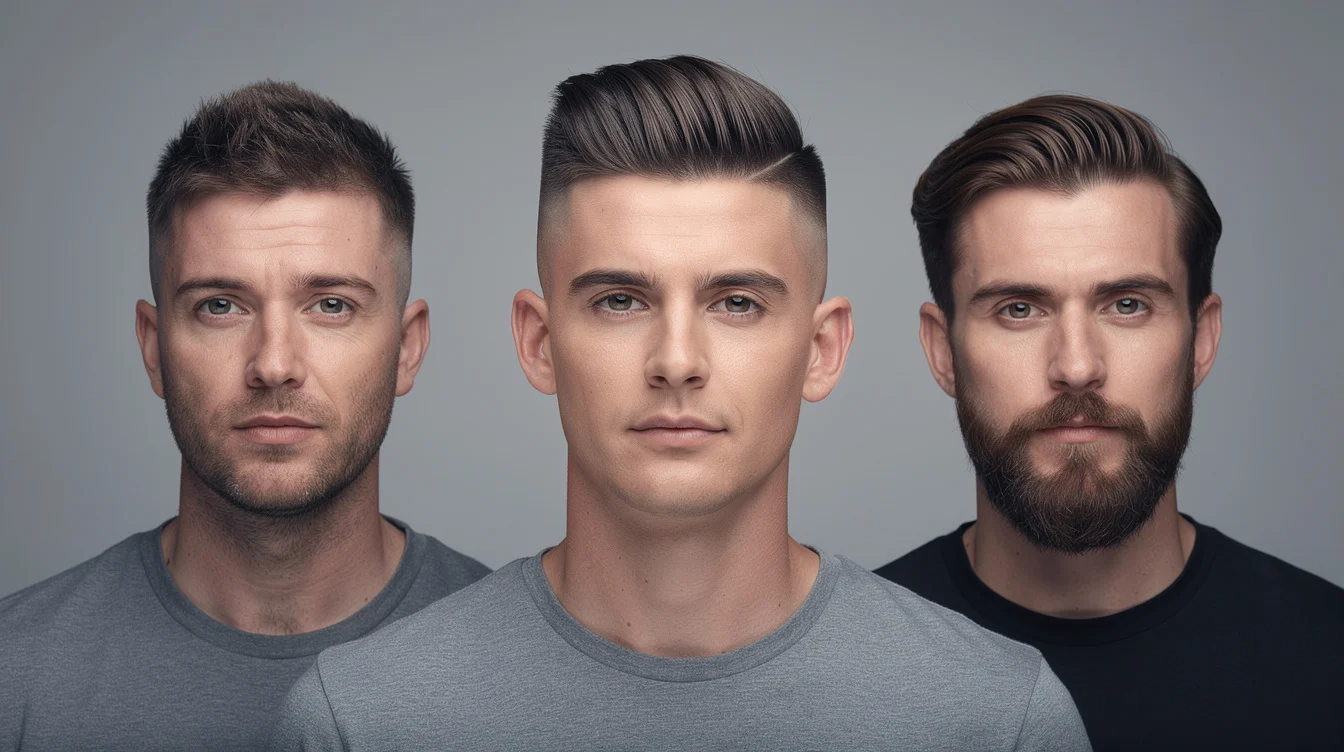
Height on top lengthens a round face; a beard widens a narrow chin. Most men’s decisions come down to those two levers.
Men have fewer variables and two unusually powerful ones:
The beard is half the haircut. A fuller beard adds jaw width and length — it fixes a heart or diamond face faster than any cut, and it is the one change you can undo in ten minutes.
Work with the hairline, not against it. A receding hairline is emphasised by long fringes swept back and disguised by shorter, forward-textured crops. Cowlicks decide where your fringe can sit, whatever you ask for.
Fade height is a dial, not a style. The same cut with a high fade looks taller and narrower; with a low fade it looks wider and softer. Round faces want high, long faces want low.
Can ChatGPT tell me which hairstyle suits me?
Partly. Upload a photo and ChatGPT will name a face shape and list cuts that theoretically suit it — roughly what this article does, personalised to your measurements. That is genuinely useful for narrowing down.
What it cannot do is show you. It answers in words, and words are exactly what fails here — “soft layers below the jaw” means five different things to five people, and none of them is your face. Ask a general image model to draw the result instead and it usually redraws you along with the hair, which tells you nothing, because the person in the picture is no longer the person going to the salon.
So use a chatbot for the shortlist, then use a dedicated AI hairstyle changer for the decision — those are built to keep your face and change only the hair.
Does face shape actually matter?
Less than the internet insists. Ask a working stylist and face shape comes somewhere after hair texture, density, growth pattern, hairline and how many minutes you will realistically spend each morning. It is a tiebreaker, not a law.
The rules above describe balance, not correctness. Plenty of people look best in exactly the cut their face shape supposedly forbids, and the reason is usually that something else — great texture, strong features, a haircut they simply love — outweighs the geometry. Treat the shortlist as a starting point, and let the preview overrule it.
See it on your own face — free
Create a free account — new accounts get starter credits, so the first tries cost nothing.
Upload a clear, straight-on photo with your hair off your face and even light.
Open the hairstyle tool and pick from 200 cuts and colours, women’s and men’s.
Compare your shortlist side by side — and take the winner to the salon on your phone.
Start with your face shape: compare your forehead, cheekbone and jaw widths and your face length, and see which is widest. Then pick cuts that balance it — length and height for a round face, softening layers for a square jaw, width for a long face. Finally, try the shortlist on a photo of yourself, because face shape only narrows the options, it does not pick the winner.
How do I find my face shape?
Tie your hair back and take a straight-on photo, then compare four things: forehead width, cheekbone width, jaw width and face length. If your face is about as wide as it is long you are round or square (soft jaw versus angular jaw). If it is clearly longer than wide you are oval or oblong. If your forehead is widest you are heart-shaped; if your cheekbones are widest you are diamond.
Is there a free app to see which hairstyle suits me?
Yes. PixiFixi runs in your phone's browser with nothing to install, and new accounts get free starter credits, so your first hairstyle previews cost nothing. You upload one photo and try cuts and colours on your own face rather than on a model.
Can ChatGPT tell me what haircut suits me?
It can name your face shape from a photo and suggest cuts, which is useful for a shortlist. What it cannot do is show you the result — it answers in text, and general image models tend to redraw your face along with the hair. Use a chatbot to narrow the options and a dedicated hairstyle tool, which keeps your face and changes only the hair, to decide.
What hairstyle suits a round face?
Anything that adds height and vertical length while keeping width off the cheeks. For women: long layers falling below the chin, a deep side part, side-swept bangs, or a pixie with volume on top. For men: short sides with height on top, such as a high fade with a textured quiff. Avoid a blunt chin-length bob, a full rounded fringe, or an all-over buzz cut.
What hairstyle suits a square face?
Anything that softens the jaw corners. For women: soft layers starting below the jaw, waves, a side-swept fringe, or a long bob ending past the chin. For men: a square jaw suits buzz cuts, crew cuts and short textured crops well, with a little length on top if you want to soften it. Avoid a blunt cut that ends exactly at the jawline.
What hairstyle suits a heart shaped face?
Anything that adds visual width at the jaw and takes it away from the forehead. For women: chin-length or collarbone cuts with the volume sitting low, curtain bangs, and a side part. For men: fuller sides, a fringe worn forward, medium length, and a beard, which is the fastest way to widen a narrow chin. Avoid tall volume on top and tight slicked-back styles.
What hairstyle suits a long or oblong face?
Anything that shortens the face visually and adds width at the sides. For women: a blunt bob or lob, waves through the mid-lengths, and a fringe — curtain or blunt — to cut down the forehead. For men: fuller sides with a flatter top, a forward-textured crop, and a low fade rather than a high one. Avoid very long straight hair and high volume on top.
What hairstyle suits a diamond face?
Anything that widens the forehead and chin so the cheekbones stop being the only wide point. For women: chin-length styles with volume at the jaw, a side-swept fringe, and texture around the chin. For men: a fringe worn forward, some length near the jaw, and a beard to balance a narrow chin. Avoid styles slicked tight to the head.
Does face shape really matter when choosing a haircut?
It matters, but less than most guides suggest. Stylists weigh hair texture, density, growth pattern, hairline and how much time you will spend styling at least as heavily. Face shape is a tiebreaker rather than a rule, and plenty of people look best in the cut their face shape supposedly forbids.
What photo works best for a hairstyle preview?
A straight-on shot in even daylight, with your hair pulled back off your face and your whole head in frame. Avoid heavy shadows, strong angles, hats and sunglasses. The clearer the outline of your face and hairline, the more accurate the preview.
The short version
Measure four widths, find your shape, take two or three cuts from your row — then stop reading and look at them on your own face. Every guide on the internet, this one included, can only tell you what usually balances a shape. It cannot tell you what suits you. A preview can, and it costs nothing to find out.